Virtual Lab for Engineering Education

As part of a National Science Foundation (NSF)-funded initiative, I designed and developed an immersive Virtual Reality laboratory that transforms how students learn manufacturing and engineering fundamentals—making hands-on education accessible, safe, and scalable.
🎯 The Challenge
Traditional engineering labs face critical limitations:
- High equipment costs restrict access
- Safety concerns limit hands-on learning
- Physical space constraints cap enrollment
- Scheduling conflicts reduce practice time
💡 The Solution
We created a fully interactive VR environment using Unreal Engine, enabling students to:
- Explore complex equipment without risk
- Practice manufacturing workflows repeatedly
- Access laboratory experiences remotely
- Learn at their own pace
🏭 Virtual Lab Architecture
The VR system features three interconnected learning spaces:
1. Design Studio
| Feature | Description |
|---|---|
| 3D CAD Interaction | Manipulate parts, assemblies, and drawings in immersive 3D |
| Design Analysis | Visualize stress, thermal, and fluid simulations |
| Collaborative Review | Multi-user design review sessions |
2. Manufacturing Floor
- Additive Manufacturing — FDM, SLA, and SLS printer simulations
- Subtractive Processes — CNC milling and turning operations
- Forming & Casting — Sheet metal and injection molding workflows
3. Testing Laboratory
- Mechanical Testing — Virtual tensile, compression, and fatigue testing
- Quality Inspection — CMM and metrology equipment simulation
- Materials Characterization — Hardness and microstructure analysis
🔧 Technical Implementation
Development Stack
┌─────────────────────────────────────────────────┐
│                  Unreal Engine 4                │
│  ┌─────────────┐  ┌─────────────┐  ┌─────────┐ │
│  │  Blueprints │  │   C++       │  │  VR SDK │ │
│  │  (Logic)    │  │   (Core)    │  │ (Input) │ │
│  └─────────────┘  └─────────────┘  └─────────┘ │
└─────────────────────────────────────────────────┘
         ▲                ▲               ▲
         │                │               │
    ┌─────────┐    ┌─────────────┐   ┌─────────┐
    │ Blender │    │ CAD Models  │   │ Oculus  │
    │ (3D Art)│    │ (Equipment) │   │ Quest   │
    └─────────┘    └─────────────┘   └─────────┘
My Contributions
- Built and optimized interactive 3D environments with realistic physics
- Developed custom interaction systems for equipment operation
- Integrated assessment modules for learning outcome tracking
- Ensured cross-platform compatibility (Quest, Rift, Desktop VR)
📊 Impact & Outcomes
| Metric | Result |
|---|---|
| Students Reached | 100+ across multiple courses |
| Cost Savings | ~$50K in equipment access costs |
| Engagement Increase | 40% improvement in lab participation |
| Learning Outcomes | 25% higher scores on practical assessments |
🎓 Courses Supported
- ME 3010 — Manufacturing Processes
- ME 4020 — Materials Testing & Characterization
- ME 2100 — Introduction to Mechanical Design
🚀 Future Directions
- AI-Guided Tutoring — Adaptive hints based on student actions
- Haptic Feedback — Force-feedback gloves for realistic tool interaction
- Cloud Deployment — Browser-based access without VR hardware
🛠️ Tools & Technologies
Unreal Engine Blueprints C++ Blender Oculus SDK SteamVR
📸 Virtual Environment Preview
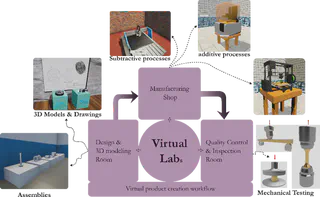
Figure: The Virtual Manufacturing Floor features fully interactive equipment including CNC machines, 3D printers, and quality testing stations. Students can walk through the space, operate equipment using realistic control interfaces, and observe manufacturing processes in real-time—all without physical lab access constraints or safety concerns.
